..................................................................................................................................
The feedback loop catches up with Romney
By
This was the night in which the conservative closed information feedback loop and its close cousin, lazy mendacity, caught up with Republican presidential nominee Mitt Romney — in a big way.
The topic was Libya. It’s an issue that should work well for the challenger; surely at the very least, Barack Obama’s administration had a tragedy on its hands, one that might have been preventable, and one that most seem to think Obama and his administration have handled poorly after the fact. There would seem to be a variety of attacks available. Was Obama’s Libya intervention a mistake? Was there something about the Libya attacks that undermined Obama’s claim of policy competency? Obama’s handling of the Arab Spring? Romney had to think himself lucky when the only foreign policy question of the night was on this topic, teed up perfectly for him.
Yet Romney drifted first to an attack on Obama for going to a fundraiser, and then wandered around the Middle East to little effect, then finished his first pass at the question with the mythical “apology tour” and his recent empty rhetoric about an “unraveling” policy.
And then it got worse. Obama lectured Romney for daring to accuse him of playing politics with the issue. The truth is, he supplied an opening for Romney; a candidate who knew what he was talking about could have pointed out that of course in the United States, these things become political issues.
Instead, Romney ignored that part of it, and clung to — and repeated — a conservative talking point about just exactly when Obama had called the attacks “terrorism,” a talking point that has the twin advantages of being both pointless and factually incorrect.
As Candy Crowley broke in and confirmed. Or at least the factually incorrect part of it. The exchange, as a whole, just seemed awful for the challenger.
The question is: Why did this portion of the debate go wrong for Romney?
Romney has been doing this for, literally, years now. His main platform on foreign policy, after all, is to reject an “apology tour” that never happened and that people have been correcting him on for years. He’s come up with the new one, “unraveling,” recently, but hasn't bothered to fill in anything — at all — about what is unraveling, or how. Nor is it just foreign policy. His tax plan doesn't come close to adding up, and his jobs plan doesn't, either. He repeats flat-out lies again and again, no matter how many times they've been shot down. As I said, lazy mendacity — even where the facts would do well for him, as in trillion-dollar deficits, he chooses instead to constantly claim that Obama doubled the deficit, which isn't true. Sure, every candidate exaggerates and stretches and spins, but Romney’s complete apparent indifference to bother to get things right is unusual.
The question is: Why shouldn't he do it? Republican-aligned media surely aren't going to call him on it. Indeed, within the GOP political loop, there’s no one who is even going to realize that they have a basic factual thing wrong; that’s what happens when you convince yourself that the neutral press is out to get you, and you've trained your supporters to only pay attention to what they hear on Fox News and the Rush Limbaugh program, so you had better stay tuned to them yourself or else you won’t be able to talk the way you need to. Of course, that’s how a candidate winds up insulting half of America, because that's what high-level party donors expect to hear.
And as I've argued, that’s also how a campaign winds up with lazy mendacity; if all it cares about is a thoroughly uncritical press, then why should it bother to back up assertions that will never, within the loop, be challenged?
Now: I have no idea what effect, if any, tonight’s debate will have on undecided voters (which, to be sure, depends to a great deal on how the press scores it, which clips get replayed, which headlines are deployed). So I don’t want to claim that Romney’s problems with the Libya question will “matter” in that sense. But I’ll say what I always say about it: The closed information loop leaves conservatives vulnerable, and it makes it very difficult for them to govern effectively when they are in office. I think anyone watching tonight saw why.
..................................................................................................................................
Wednesday, October 17, 2012

Tuesday, October 16, 2012
Debates matter now more than ever
..................................................................................................................................
Debates vital as truth vanishes from politics
By Stephen Michels, October 16, 2012
The presidential debates usually are tightly scripted and well-rehearsed joint press conferences. But because they're one of the few places where our next president can speak to the country at length and unfiltered by the media, the debates matter now more than ever.
Democracy requires a dialogue about its fundamental principles. But instead of a contest of political assertions relating to policy goals, our politics has become more about affirming a particular worldview and social consciousness. What we're seeing might be the first postmodern election.
The essential feature of modernism is the pursuit of objective and empirical truth. From a postmodern perspective, truth as a goal is as impossible as it is silly.
Reality has been on life support for years - dating back to 1997, when Bill Clinton urged us to contemplate the meaning of "is." But what was once the egregious exception has become the norm. Truth has taken a serious hit this campaign season.
"We're not going to let our campaign be dictated by fact checkers," said Neil Newhouse, a pollster for the Romney campaign. Newhouse was soundly criticized, but his was a classic Kinsley-style gaffe-truth.
It used to be that competing narratives were spun from a commonly accepted set of facts. The goal was to put those facts in the best possible light. Facts were politicized, but agreement on policy was still possible.
The new narratives begin with a moral stance, which facts are then spun into or out of it. If the goal before was winning elections and forming public policy, the new goal is more demanding but actually easier to achieve: righteousness. Disagreement is essential to preserve the integrity of the narrative, which means that compromise is not only impossible but contemptible.
The conservative narrative includes self-reliance, American exceptionalism, and Judeo-Christian values. The liberal narrative is based on equality and the inherent goodness of human nature and government. The rhetoric of freedom is perhaps the most contested territory: conservatives want freedom to mean economic freedom, while liberals are more concerned with political freedom.
As much as they are firm, each side is also flawed. In their pure forms, the conservative position is as specific and skeptical as the liberal position is vague and naive. Liberals put their faith in themselves and each other, while conservatives use religion and God.
Conservatives chide the left for its reliance on "identity" politics, by which they mean race, class, gender and sexual orientation. But the right too has its identities: American, Christian, entrepreneur. Conservatives emphasize sameness and make a virtue of exclusion; liberals emphasize difference and make a virtue of inclusion.
Both narratives also misuse history - conservatives for its supposed goodness and justice, liberals for its relative badness and injustice.
The narratives have grown impenetrable not in spite of our media, but because of it. The number of media outlets and volume of coverage means that every citizen can construct his or her own political narratives, safe inside bubbles of interpretation and meaning.
For their part, candidates feed into the frenzy - Obama stays away from Fox, Romney stays away from MSNBC. But the media is under no compulsion to create a safe space for softball questions. And, conversely, if voters are going to hear what they want to hear, then there's little to be lost from giving it to them.
In short, the quest for objectivity and truth has rendered them both inconsequential. A refusal to believe scientific consensus not because of its uncertainty, but because of its certainty. The Dark Ages were dark because of superstition and ignorance. But the New Dark Age is dark because we've fitted ourselves with blinders. It's Orwell's 1984 - without the need for state tyranny.
These two perspectives are ideal types, but, short of a real crisis, it's hard to imagine a way out.
That's why the danger of money looms so large - whether it's corporate, union or private. Any common discourse would have to begin on level ground.
It's possible that new communities could be formed where issues are less abstract and problems require more immediate attention. But that would mean a fracturing of national political life.
The debates might be the last place where the narratives collide, which is exactly why we need more of them.
..................................................................................................................................
Debates vital as truth vanishes from politics
By Stephen Michels, October 16, 2012
The presidential debates usually are tightly scripted and well-rehearsed joint press conferences. But because they're one of the few places where our next president can speak to the country at length and unfiltered by the media, the debates matter now more than ever.
Democracy requires a dialogue about its fundamental principles. But instead of a contest of political assertions relating to policy goals, our politics has become more about affirming a particular worldview and social consciousness. What we're seeing might be the first postmodern election.
The essential feature of modernism is the pursuit of objective and empirical truth. From a postmodern perspective, truth as a goal is as impossible as it is silly.
Reality has been on life support for years - dating back to 1997, when Bill Clinton urged us to contemplate the meaning of "is." But what was once the egregious exception has become the norm. Truth has taken a serious hit this campaign season.
"We're not going to let our campaign be dictated by fact checkers," said Neil Newhouse, a pollster for the Romney campaign. Newhouse was soundly criticized, but his was a classic Kinsley-style gaffe-truth.
It used to be that competing narratives were spun from a commonly accepted set of facts. The goal was to put those facts in the best possible light. Facts were politicized, but agreement on policy was still possible.
The new narratives begin with a moral stance, which facts are then spun into or out of it. If the goal before was winning elections and forming public policy, the new goal is more demanding but actually easier to achieve: righteousness. Disagreement is essential to preserve the integrity of the narrative, which means that compromise is not only impossible but contemptible.
The conservative narrative includes self-reliance, American exceptionalism, and Judeo-Christian values. The liberal narrative is based on equality and the inherent goodness of human nature and government. The rhetoric of freedom is perhaps the most contested territory: conservatives want freedom to mean economic freedom, while liberals are more concerned with political freedom.
As much as they are firm, each side is also flawed. In their pure forms, the conservative position is as specific and skeptical as the liberal position is vague and naive. Liberals put their faith in themselves and each other, while conservatives use religion and God.
Conservatives chide the left for its reliance on "identity" politics, by which they mean race, class, gender and sexual orientation. But the right too has its identities: American, Christian, entrepreneur. Conservatives emphasize sameness and make a virtue of exclusion; liberals emphasize difference and make a virtue of inclusion.
Both narratives also misuse history - conservatives for its supposed goodness and justice, liberals for its relative badness and injustice.
The narratives have grown impenetrable not in spite of our media, but because of it. The number of media outlets and volume of coverage means that every citizen can construct his or her own political narratives, safe inside bubbles of interpretation and meaning.
For their part, candidates feed into the frenzy - Obama stays away from Fox, Romney stays away from MSNBC. But the media is under no compulsion to create a safe space for softball questions. And, conversely, if voters are going to hear what they want to hear, then there's little to be lost from giving it to them.
In short, the quest for objectivity and truth has rendered them both inconsequential. A refusal to believe scientific consensus not because of its uncertainty, but because of its certainty. The Dark Ages were dark because of superstition and ignorance. But the New Dark Age is dark because we've fitted ourselves with blinders. It's Orwell's 1984 - without the need for state tyranny.
These two perspectives are ideal types, but, short of a real crisis, it's hard to imagine a way out.
That's why the danger of money looms so large - whether it's corporate, union or private. Any common discourse would have to begin on level ground.
It's possible that new communities could be formed where issues are less abstract and problems require more immediate attention. But that would mean a fracturing of national political life.
The debates might be the last place where the narratives collide, which is exactly why we need more of them.
..................................................................................................................................
We must understand that we are not one another’s enemy
..................................................................................................................................
We can disagree without being enemies
By Warren Bolton, October 14, 2912
And what of this unrelenting cry, “take our country back”? Take it back where? Back to the 1960s or even the 1860s?
We can disagree without being enemies
By Warren Bolton, October 14, 2912
It's natural for President Barack Obama and Mitt Romney to fiercely compete for the highest office in the land, but the day they become enemies who work at cross purposes and choose to do anything to win the presidency, losing sight of the America we pledge to be “one Nation under God, indivisible, with liberty and justice for all,” we’re in trouble — all of us.
I don’t care what your political persuasion is or what the color of your skin might be or how different your ideology is from the man next door, we must understand that we are not one another’s enemy.
Believe it or not, Mitt Romney is not the devil. Neither is President Obama. Neither are Democratic and Republican opponents vying for congressional, State House or county council seats.
The adversarial tone set by elected and political leaders has poisoned not only our local and state politics but even our local discourse. Some have come to look at people they see almost daily in their community as adversaries because they vote differently or because they have a different philosophy about the role of government.
But your black, white, Hispanic and Asian neighbors and co-workers aren't your enemies. So your neighbor or co-worker is a so-called liberal and you’re a so-called conservative. So what?
Yes, we have cultural, political and even religious differences. But no, we Americans are not enemies. Absolutely not. Enemies seek the demise — even the extinction — of their foes. If that’s what America has come to — and, we have come dangerously close — what kind of future does it truly have?
Frankly, we've got enough enemies, foreign and domestic. Lest we forget, al-Qaida has a way of reminding us of that fact, as it apparently did in Benghazi, Libya. Domestically, our enemies range from crime to poor education to poverty to poor health care. We have a tremendous challenge trying to overcome our addiction to debt.
It will take the undivided attention of a unified America to deal with these critical matters. Sure, we have different ideas about how to attack them.
But here’s the thing: We've got the knowledge, resources and ideas to address many of these problems. But we don’t have the politicians with enough courage and willingness to work together to make it happen. Some work against good legislation so the opposing party doesn't get credit or a political advantage; others shy away from compromise because of threats from extreme elements in their own party.
Meanwhile, the national debt grows, children go uneducated or undereducated, health care costs skyrocket.
But, anymore, opposing parties won’t do anything to move this country forward if it’s not exactly what they want. Some on Capitol Hill are so entrenched they refuse to compromise to deal with the nation’s debt. They would rather fall headlong over a fiscal cliff.
Where did this all-or-nothing, do-or-die attitude come from?
Many people say America is going down the tubes and needs to be fixed, but their answer invariably includes getting rid of everyone who doesn't see things their way.
I’m convinced that Republicans and Democrats can be opponents without being enemies. They can disagree on how to resolve the deficit or fix Medicare without pledging the eternal doom of the other.
Similarly, people across our diverse America, regardless of their race, creed or color, can get along. Yes, race is still an issue despite the strides we've made. Sit down and deal with it. Immigration is a critical issue that we must address. Address it.
But we must do so in civil, pragmatic ways. Instead, we yell at one another and do nothing but allow problems to fester because we allow extremists and opportunists to frame the debates and squeeze out the sensible middle.
Every day in schools across the land and at the beginning of governmental meetings we pledge to be “one Nation under God, indivisible, with liberty and justice for all.”
Yet our political rhetoric and actions often don’t reflect “one nation” that is “indivisible.” And it’s certainly not “under God”: The Bible identifies the enemy as the devil in 1 Peter 5:8. It also tells us in Ephesians 6:22 that “we wrestle not against flesh and blood, but against principalities, against powers, against the rulers of the darkness of this world, against spiritual wickedness in high places.”
So why is it that — whether in national, state or local politics — we find some of the most mean-spirited, hateful and divisive language directed at fellow Americans? We've heard GOP politicians anxiously anticipate President Obama's “Waterloo,” a Democratic operative suggest a political strategy designed to “kill Romney” and both sides accuse one another of “class warfare.”
Count me out.
We must end this era of personal, hateful politics that poisons public discourse, sows seeds of division among neighbors and frays our republic. We have found far too many enemies next door or around the corner or on the other side of the track or two cubicles down.
Shall we remain a house divide? Or shall we live out the true meaning of the pledge to be “one Nation under God, indivisible, with liberty and justice for all”?
..................................................................................................................................
Monday, October 15, 2012
Boycott the Koch Bros.
..................................................................................................................................
I think we should "stifle" the Koch Brothers by boycotting their Georgia-Pacific products...... and by voting for Obama!
..................................................................................................................................
..................................................................................................................................
Koch Brothers Send Pro-Romney Mailing To 50,000 Employees, Allegedly 'Stifle Political Speech'
....................................................................................................................................................................................................................................................................
Koch brothers warn employees of layoffs if Obama re-elected
....................................................................................................................................................................................................................................................................
Charles Koch relentless in pursuing his goals
....................................................................................................................................................................................................................................................................
The Kochs' quest to save America
....................................................................................................................................................................................................................................................................
5 Ways the Koch Brothers' Money Has a Grip on Mitt Romney
....................................................................................................................................................................................................................................................................
Heroes or villains? Koch brothers’ largess stirs controversy
....................................................................................................................................................................................................................................................................
William Koch, Billionaire Koch Brother, Accused Of Imprisoning Executive
....................................................................................................................................................................................................................................................................
The Koch Brothers Stoop to a New Low–Use Election Fear Tactics on Own Employees
..................................................................................................................................
I think we should "stifle" the Koch Brothers by boycotting their Georgia-Pacific products...... and by voting for Obama!
..................................................................................................................................
..................................................................................................................................
Koch Brothers Send Pro-Romney Mailing To 50,000 Employees, Allegedly 'Stifle Political Speech'
....................................................................................................................................................................................................................................................................
Koch brothers warn employees of layoffs if Obama re-elected
....................................................................................................................................................................................................................................................................
Charles Koch relentless in pursuing his goals
....................................................................................................................................................................................................................................................................
The Kochs' quest to save America
....................................................................................................................................................................................................................................................................
5 Ways the Koch Brothers' Money Has a Grip on Mitt Romney
....................................................................................................................................................................................................................................................................
Heroes or villains? Koch brothers’ largess stirs controversy
....................................................................................................................................................................................................................................................................
William Koch, Billionaire Koch Brother, Accused Of Imprisoning Executive
....................................................................................................................................................................................................................................................................
The Koch Brothers Stoop to a New Low–Use Election Fear Tactics on Own Employees
..................................................................................................................................
Sunday, October 14, 2012
Romney's clueless ways
..................................................................................................................................
Mr. Romney, people die because they lack health insurance
By Barbara Shelly, October 14, 2012
Poor Mitt Romney. In trying to be all things to all people on health care, he’s found himself stuck in a time warp.
The Republican presidential nominee, supposedly a new man after his sparkling debate performance last week, has not completely abandoned his clueless ways, as he revealed in an interview this week with the editorial board of the Columbus Dispatch.
While discussing the U.S. health care system, Romney amazingly and wrongly said that Americans don’t die for lack of health insurance.
“We don’t have a setting across this country where if you don’t have insurance, we just say to you, ‘Tough luck, you’re going to die when you have your heart attack,’” he said.
“No, you go to the hospital, you get treated, you get care, and it’s paid for, either by charity, the government or by the hospital. We don’t have people that become ill, who die in their apartment because they don’t have insurance.”
Oh yes we do, Mr. Romney. This nation has millions of people who become ill because they can’t afford preventive medicine. We have sick people who can’t get well because they can’t afford medications. We have people who live in pain because they can’t pay for treatments.
And yes, Mr. Romney, we have people who die sooner than they should because they don’t have insurance. Different studies have placed the number from 18,000 to nearly 45,000 people a year.
“He is ignorant of the facts,” said Dr. Sharon Lee, chief executive of Family Health Care, a clinic in Kansas City, Kan. “I see patients all the time who die or have very high morbidity because of a lack of insurance.”
We may pack a patient into an ambulance and rush to the hospital once the heart attack occurs, as Romney happily noted. But if that person is one of the 48 million Americans who are uninsured, we probably won’t pay for the blood pressure medication or the stent or the pacemaker that could have prevented the heart attack from occurring.
Lee spoke of just such a person.
The man lost a good job with health insurance because of a heart condition. He suffered terrible chest pains but avoided a visit to the emergency room, not wanting to burden his family with the bills that would result. When a relative finally coaxed him into Lee’s clinic, she took him immediately to a hospital.
“He had a cardiac bypass that afternoon and he died,” Lee said.
What kind of a health policy encourages people to wait until they are in crisis, and then, as Romney explained, “you go to the hospital, you get treated…and it’s paid for, either by charity, the government or by the hospital”?
Oh, wait. That’s the U.S. policy. Health care by default. The broken system that costs more and produces poorer results than most other industrialized nations.
The one that Romney signed landmark legislation to fix when he was governor of Massachusetts, and he worked with his legislature to design a system whereby nearly everyone would have insurance policies, some with the help of government subsidies, others prompted by employer and individual mandates.
The federal Affordable Care Act, modeled after the Massachusetts law, is designed to fix the same problems that Romney took on as governor.
But now Romney says he’ll repeal “Obamacare,” and he lends a clumsy endorsement to a status quo that isn’t acceptable to anyone.
Romney surely knows better. His work in Massachusetts shows he understands the benefits of getting people insured.
In the interview with the Ohio newspaper he proposed open enrollment periods in which people could purchase insurance without being denied for a pre-existing condition. As a fallback to the individual mandate, that’s not a bad idea. Kansas Insurance Commissioner Sandy Praeger pitched it early in the health care debate.
But for every step forward on health care, Romney follows with two steps backward. And now he’s gotten himself stuck in the cruel and costly system that he once set out to fix.
..................................................................................................................................
Mr. Romney, people die because they lack health insurance
By Barbara Shelly, October 14, 2012
Poor Mitt Romney. In trying to be all things to all people on health care, he’s found himself stuck in a time warp.
The Republican presidential nominee, supposedly a new man after his sparkling debate performance last week, has not completely abandoned his clueless ways, as he revealed in an interview this week with the editorial board of the Columbus Dispatch.
While discussing the U.S. health care system, Romney amazingly and wrongly said that Americans don’t die for lack of health insurance.
“We don’t have a setting across this country where if you don’t have insurance, we just say to you, ‘Tough luck, you’re going to die when you have your heart attack,’” he said.
“No, you go to the hospital, you get treated, you get care, and it’s paid for, either by charity, the government or by the hospital. We don’t have people that become ill, who die in their apartment because they don’t have insurance.”
Oh yes we do, Mr. Romney. This nation has millions of people who become ill because they can’t afford preventive medicine. We have sick people who can’t get well because they can’t afford medications. We have people who live in pain because they can’t pay for treatments.
And yes, Mr. Romney, we have people who die sooner than they should because they don’t have insurance. Different studies have placed the number from 18,000 to nearly 45,000 people a year.
“He is ignorant of the facts,” said Dr. Sharon Lee, chief executive of Family Health Care, a clinic in Kansas City, Kan. “I see patients all the time who die or have very high morbidity because of a lack of insurance.”
We may pack a patient into an ambulance and rush to the hospital once the heart attack occurs, as Romney happily noted. But if that person is one of the 48 million Americans who are uninsured, we probably won’t pay for the blood pressure medication or the stent or the pacemaker that could have prevented the heart attack from occurring.
Lee spoke of just such a person.
The man lost a good job with health insurance because of a heart condition. He suffered terrible chest pains but avoided a visit to the emergency room, not wanting to burden his family with the bills that would result. When a relative finally coaxed him into Lee’s clinic, she took him immediately to a hospital.
“He had a cardiac bypass that afternoon and he died,” Lee said.
What kind of a health policy encourages people to wait until they are in crisis, and then, as Romney explained, “you go to the hospital, you get treated…and it’s paid for, either by charity, the government or by the hospital”?
Oh, wait. That’s the U.S. policy. Health care by default. The broken system that costs more and produces poorer results than most other industrialized nations.
The one that Romney signed landmark legislation to fix when he was governor of Massachusetts, and he worked with his legislature to design a system whereby nearly everyone would have insurance policies, some with the help of government subsidies, others prompted by employer and individual mandates.
The federal Affordable Care Act, modeled after the Massachusetts law, is designed to fix the same problems that Romney took on as governor.
But now Romney says he’ll repeal “Obamacare,” and he lends a clumsy endorsement to a status quo that isn’t acceptable to anyone.
Romney surely knows better. His work in Massachusetts shows he understands the benefits of getting people insured.
In the interview with the Ohio newspaper he proposed open enrollment periods in which people could purchase insurance without being denied for a pre-existing condition. As a fallback to the individual mandate, that’s not a bad idea. Kansas Insurance Commissioner Sandy Praeger pitched it early in the health care debate.
But for every step forward on health care, Romney follows with two steps backward. And now he’s gotten himself stuck in the cruel and costly system that he once set out to fix.
..................................................................................................................................
Thank you, Mr. Vice President!
..................................................................................................................................
What Biden Accomplished
By Jan Ting, October 14, 2012
During last week’s debate, Vice President Biden made clear that House Republicans, including Paul Ryan, are responsible for cutting $300 million for embassy and diplomatic security to pay for more tax cuts, even as they try to score political points off the murder by terrorists of the U.S. ambassador to Libya and other Americans.
Biden made clear that despite constant Republican criticism of U.S. policy towards Iran, Romney and Ryan don’t specify anything different, and that international sanctions are in fact hurting Iran. Romney and Ryan have only been willing to hint at another open-ended U.S. war in another Islamic country in the Middle East, but so far have not yet openly advocated such a war.
On the economy, Biden contrasted the Obama administration’s success in saving the auto industry and millions of American jobs when Romney advocated letting the auto industry go bankrupt.
Biden contrasted the administration’s concern for American workers with Mitt Romney’s stated contempt for the 47 percent of Americans, including retirees, the military, students, and the unemployed and underemployed, who don’t pay federal income taxes. Romney called them unwilling to assume responsibility for their own lives. Ryan called them “takers”. And Biden rejected Ryan’s suggestion that Romney misspoke by inviting everyone to listen to the tape of Romney’s carefully chosen and scripted words.
Biden exposed Paul Ryan’s hypocrisy in personally requesting stimulus funds to create jobs in Wisconsin, even as he criticized the stimulus for not creating jobs.
On Social Security and Medicare, Biden asked who should Americans trust to defend those programs, the Democrats who created and defended those programs at every step over Republican opposition, or the Republicans who have never supported those programs and the guarantees they represent.
On the health insurance reform now known as Obamacare, Biden made clear that the Romney-Ryan alternative is for the uninsured to seek health care at hospital emergency rooms, which happens to be the most inefficient and expensive way to try to deliver health care.
On taxes, Biden exposed the absurdity of Romney’s 20 percent across the board tax cuts, which give the biggest cuts to the rich, to be made deficit neutral by closing of unspecified loopholes and deductions. Which ones? Whose?
Not the capital gains loophole that lets Mitt Romney pay 13 percent taxes on $20 million in reported income. Romney and Ryan defend that loophole and advocate reducing the capital gains rate as well as the federal estate tax rate, paid only by the very richest decedents, to zero.
On defense, Biden made clear that Ryan and congressional Republicans insisted on the impending sequestration budget cuts they now bemoan, as a condition to raising the debt ceiling, and that Romney and Ryan would have kept American troops in Iraq, and would keep American troops in Afghanistan without the 2014 deadline set by President Obama.
On abortion, Biden made clear that he and the administration are not going to impose their personal religious views on a diverse American society with many differing religious and philosophical beliefs. Conversely, Paul Ryan made clear that he and Mitt Romney, if elected, will try their best to do just that.
Thank you, Mr. Vice President!
..................................................................................................................................
What Biden Accomplished
By Jan Ting, October 14, 2012
During last week’s debate, Vice President Biden made clear that House Republicans, including Paul Ryan, are responsible for cutting $300 million for embassy and diplomatic security to pay for more tax cuts, even as they try to score political points off the murder by terrorists of the U.S. ambassador to Libya and other Americans.
Biden made clear that despite constant Republican criticism of U.S. policy towards Iran, Romney and Ryan don’t specify anything different, and that international sanctions are in fact hurting Iran. Romney and Ryan have only been willing to hint at another open-ended U.S. war in another Islamic country in the Middle East, but so far have not yet openly advocated such a war.
On the economy, Biden contrasted the Obama administration’s success in saving the auto industry and millions of American jobs when Romney advocated letting the auto industry go bankrupt.
Biden contrasted the administration’s concern for American workers with Mitt Romney’s stated contempt for the 47 percent of Americans, including retirees, the military, students, and the unemployed and underemployed, who don’t pay federal income taxes. Romney called them unwilling to assume responsibility for their own lives. Ryan called them “takers”. And Biden rejected Ryan’s suggestion that Romney misspoke by inviting everyone to listen to the tape of Romney’s carefully chosen and scripted words.
Biden exposed Paul Ryan’s hypocrisy in personally requesting stimulus funds to create jobs in Wisconsin, even as he criticized the stimulus for not creating jobs.
On Social Security and Medicare, Biden asked who should Americans trust to defend those programs, the Democrats who created and defended those programs at every step over Republican opposition, or the Republicans who have never supported those programs and the guarantees they represent.
On the health insurance reform now known as Obamacare, Biden made clear that the Romney-Ryan alternative is for the uninsured to seek health care at hospital emergency rooms, which happens to be the most inefficient and expensive way to try to deliver health care.
On taxes, Biden exposed the absurdity of Romney’s 20 percent across the board tax cuts, which give the biggest cuts to the rich, to be made deficit neutral by closing of unspecified loopholes and deductions. Which ones? Whose?
Not the capital gains loophole that lets Mitt Romney pay 13 percent taxes on $20 million in reported income. Romney and Ryan defend that loophole and advocate reducing the capital gains rate as well as the federal estate tax rate, paid only by the very richest decedents, to zero.
On defense, Biden made clear that Ryan and congressional Republicans insisted on the impending sequestration budget cuts they now bemoan, as a condition to raising the debt ceiling, and that Romney and Ryan would have kept American troops in Iraq, and would keep American troops in Afghanistan without the 2014 deadline set by President Obama.
On abortion, Biden made clear that he and the administration are not going to impose their personal religious views on a diverse American society with many differing religious and philosophical beliefs. Conversely, Paul Ryan made clear that he and Mitt Romney, if elected, will try their best to do just that.
Thank you, Mr. Vice President!
..................................................................................................................................
Romney = multiple choice
..................................................................................................................................
[snipped]
We're left wondering: What are Romney's core political principles? He has none. Teddy Kennedy once said, "Mitt Romney isn't pro-choice or anti-choice, he's multiple choice." That's true on almost every issue, and it's part of why Romney's favorability rating has long been underwater: His unfavorability is higher than his favorability. Other candidates with underwater favorability ratings include Carter, Mondale, the first Bush and Kerry. They all lost.
[snipped]
-- Don't worry, Obama's still got this
..................................................................................................................................
[snipped]
We're left wondering: What are Romney's core political principles? He has none. Teddy Kennedy once said, "Mitt Romney isn't pro-choice or anti-choice, he's multiple choice." That's true on almost every issue, and it's part of why Romney's favorability rating has long been underwater: His unfavorability is higher than his favorability. Other candidates with underwater favorability ratings include Carter, Mondale, the first Bush and Kerry. They all lost.
[snipped]
-- Don't worry, Obama's still got this
..................................................................................................................................
First debate woes not necessarily fatal
..................................................................................................................................
Incumbents usually fare poorly in first debate
By Melissa Griffin, October 11, 2012
With the Vice-Presidential debate behind us, all that remains of the mano-a-mano matchups before Election Day are the final two presidential debates.
According to a Pew research poll, before the first presidential debate, 51 percent of respondents believed that President Barack Obama would win. Many of us were surprised at his dismal performance, but perhaps we shouldn’t have been.
Alan Schroeder wrote in his 2008 book, “Presidential Debates: Fifty Years of High-Risk TV,” “With the exception of Bill Clinton in 1996, the incumbent is generally thought to have faced the more difficult task.”
Indeed (excepting Bill Clinton in 1996) since the first televised presidential debate in 1960 when John F. Kennedy beat Vice President Richard Nixon, the incumbent has never “won” the first debate in a televised series. The 1976 debate between challenger Jimmy Carter and incumbent Gerald Ford was a draw and the 1980 debate between Carter and Ronald Reagan was won by Reagan. Four years later, when Reagan was challenged by Walter Mondale, William Safire wrote, “Hitherto-smug Republicans are wondering what to do now that Ronald Reagan has been creamed by Walter Mondale in the opening debate.”
The next incumbent versus challenger debate was in 1992 when the winner of the first debate seemed to be Ross Perot with 47 percent of the “instant reaction” vote, followed by Bill Clinton with 30 percent and George H.W. Bush with 16 percent.
That same poll showed that 53 percent of viewers believed Kerry had won the first debate in the 2004 presidential race. Only to 37 percent believed incumbent president George W. Bush had won.
Of course, Gallup’s “instant reaction” poll from the first presidential election of 2012 was historic in its agony and ecstasy: A whopping 72 percent believed challenger Mitt Romney did a better job than Obama and only 20 percent believed Obama did the better job.
Can Obama come back? Reagan still beat Mondale and Bush still beat Kerry, so losing a first debate isn’t necessarily fatal so long as the president can rehabilitate himself in subsequent debates.
The next Obama-Romney event is a town-hall style debate about “foreign and domestic policy.” Romney had to run pretty far to the right on issues like women’s reproductive rights, gay marriage and immigration to get the Republican nomination but hasn’t discussed those issues much since then. The town hall debate would be a good place for Obama to put those issues front and center to remind voters that there are non-economic implications for a Romney presidency.
Foreign policy is the subject of the last debate and an area where Obama has traditionally polled well ahead of Romney. Although Obama’s fumbles in Libya have brought those numbers down, Romney’s comments about Palestinians not wanting peace and his recent difficulties articulating what he would do differently as president still make this a better subject for Obama than the economy.
From an historical and practical perspective, Obama can still rebound and let his loss at the October 3 debate join the list of first-debate fumbles by incumbents.
..................................................................................................................................
Incumbents usually fare poorly in first debate
By Melissa Griffin, October 11, 2012
With the Vice-Presidential debate behind us, all that remains of the mano-a-mano matchups before Election Day are the final two presidential debates.
According to a Pew research poll, before the first presidential debate, 51 percent of respondents believed that President Barack Obama would win. Many of us were surprised at his dismal performance, but perhaps we shouldn’t have been.
Alan Schroeder wrote in his 2008 book, “Presidential Debates: Fifty Years of High-Risk TV,” “With the exception of Bill Clinton in 1996, the incumbent is generally thought to have faced the more difficult task.”
Indeed (excepting Bill Clinton in 1996) since the first televised presidential debate in 1960 when John F. Kennedy beat Vice President Richard Nixon, the incumbent has never “won” the first debate in a televised series. The 1976 debate between challenger Jimmy Carter and incumbent Gerald Ford was a draw and the 1980 debate between Carter and Ronald Reagan was won by Reagan. Four years later, when Reagan was challenged by Walter Mondale, William Safire wrote, “Hitherto-smug Republicans are wondering what to do now that Ronald Reagan has been creamed by Walter Mondale in the opening debate.”
The next incumbent versus challenger debate was in 1992 when the winner of the first debate seemed to be Ross Perot with 47 percent of the “instant reaction” vote, followed by Bill Clinton with 30 percent and George H.W. Bush with 16 percent.
That same poll showed that 53 percent of viewers believed Kerry had won the first debate in the 2004 presidential race. Only to 37 percent believed incumbent president George W. Bush had won.
Of course, Gallup’s “instant reaction” poll from the first presidential election of 2012 was historic in its agony and ecstasy: A whopping 72 percent believed challenger Mitt Romney did a better job than Obama and only 20 percent believed Obama did the better job.
Can Obama come back? Reagan still beat Mondale and Bush still beat Kerry, so losing a first debate isn’t necessarily fatal so long as the president can rehabilitate himself in subsequent debates.
The next Obama-Romney event is a town-hall style debate about “foreign and domestic policy.” Romney had to run pretty far to the right on issues like women’s reproductive rights, gay marriage and immigration to get the Republican nomination but hasn’t discussed those issues much since then. The town hall debate would be a good place for Obama to put those issues front and center to remind voters that there are non-economic implications for a Romney presidency.
Foreign policy is the subject of the last debate and an area where Obama has traditionally polled well ahead of Romney. Although Obama’s fumbles in Libya have brought those numbers down, Romney’s comments about Palestinians not wanting peace and his recent difficulties articulating what he would do differently as president still make this a better subject for Obama than the economy.
From an historical and practical perspective, Obama can still rebound and let his loss at the October 3 debate join the list of first-debate fumbles by incumbents.
..................................................................................................................................
Saturday, October 13, 2012
The 1 percent's responsibility
..................................................................................................................................
The Self-Destruction of the 1 Percent
..................................................................................................................................
The Self-Destruction of the 1 Percent
By Chrystia Freeland, published October 13, 2012
[snipped]
The story of Venice’s rise and fall is told by the scholars Daron Acemoglu and James A. Robinson, in their book “Why Nations Fail: The Origins of Power, Prosperity, and Poverty,” as an illustration of their thesis that what separates successful states from failed ones is whether their governing institutions are inclusive or extractive.
Extractive states are controlled by ruling elites whose objective is to extract as much wealth as they can from the rest of society. Inclusive states give everyone access to economic opportunity; often, greater inclusiveness creates more prosperity, which creates an incentive for ever greater inclusiveness.
The history of the United States can be read as one such virtuous circle. But as the story of Venice shows, virtuous circles can be broken. Elites that have prospered from inclusive systems can be tempted to pull up the ladder they climbed to the top. Eventually, their societies become extractive and their economies languish.
That was the future predicted by Karl Marx, who wrote that capitalism contained the seeds of its own destruction. And it is the danger America faces today, as the 1 percent pulls away from everyone else and pursues an economic, political and social agenda that will increase that gap even further — ultimately destroying the open system that made America rich and allowed its 1 percent to thrive in the first place.
You can see America’s creeping Serrata in the growing social and, especially, educational chasm between those at the top and everyone else. At the bottom and in the middle, American society is fraying, and the children of these struggling families are lagging the rest of the world at school.
Economists point out that the woes of the middle class are in large part a consequence of globalization and technological change. Culture may also play a role. In his recent book on the white working class, the libertarian writer Charles Murray blames the hollowed-out middle for straying from the traditional family values and old-fashioned work ethic that he says prevail among the rich (whom he castigates, but only for allowing cultural relativism to prevail).
There is some truth in both arguments. But the 1 percent cannot evade its share of responsibility for the growing gulf in American society.
[snipped]
..................................................................................................................................
Romney, the plagiarist
..................................................................................................................................
TV writer tells Romney to stop using my line
Posted by William Douglas, October 12, 2012
The writer-director of the television show "Friday Night Lights" is demanding that Republican presidential candidate Mitt Romney stop using a key catch phrase from the show in his speeches, according to the Hollywood Reporter.
Peter Berg, a supporter of President Barack Obama, fired off a letter to Romney's campaign office stating that he "was not thrilled when I saw that you plagiarized" the phrase "Clear Eyes, Full Hearts, Can't Lose" from the football-themed show and began using it "on posters, your Facebook page and as part of your stump speeches."
In the letter, obatianed [sic] by The Hollywood Reporter, Berg wrote "Your politics and campaign are clearly not aligned with the themes we portrayed in our series."
"Your use of the expression falsely and inappropriately associates "Friday Night Lights" with the Romney/Ryan campaign," Berg's letter states. "Mitt, we wish you and your family all the best. We are grateful for your support of our beloved show, but we are not in any way affiliated with your campaign. Please come up with your own campaign slogan."
Ironically, "Friday Night Lights" is based on the book "Friday Night Lights: A Town, A Team And A Dream" by Buzz Bissinger who recently announced that he's supporting Romney.
..................................................................................................................................
TV writer tells Romney to stop using my line
Posted by William Douglas, October 12, 2012
The writer-director of the television show "Friday Night Lights" is demanding that Republican presidential candidate Mitt Romney stop using a key catch phrase from the show in his speeches, according to the Hollywood Reporter.
Peter Berg, a supporter of President Barack Obama, fired off a letter to Romney's campaign office stating that he "was not thrilled when I saw that you plagiarized" the phrase "Clear Eyes, Full Hearts, Can't Lose" from the football-themed show and began using it "on posters, your Facebook page and as part of your stump speeches."
In the letter, obatianed [sic] by The Hollywood Reporter, Berg wrote "Your politics and campaign are clearly not aligned with the themes we portrayed in our series."
"Your use of the expression falsely and inappropriately associates "Friday Night Lights" with the Romney/Ryan campaign," Berg's letter states. "Mitt, we wish you and your family all the best. We are grateful for your support of our beloved show, but we are not in any way affiliated with your campaign. Please come up with your own campaign slogan."
Ironically, "Friday Night Lights" is based on the book "Friday Night Lights: A Town, A Team And A Dream" by Buzz Bissinger who recently announced that he's supporting Romney.
..................................................................................................................................
Romney: "completely wrong"
..................................................................................................................................
Google search for 'completely wrong' yields page of Romney photos
"... A Google spokesman said the gallery of photos is the unintentional result of normal Google analytics, which produce images associated with popular phrases in news headlines and search terms, and not the result of any effort to skew the results. ..."
..................................................................................................................................
'Completely wrong,' Mitt Romney, and the Google dust-up
"... In a statement to ABC News, Google called the whole thing "natural" – in other words, not malicious or premeditated. Not that Fox News was quite ready to believe it. The networkpointed out today that Google is a "left-leaning" company, and that "Google CEO Eric Schmidt has visited the White House 14 times since January 2009." "
..................................................................................................................................
Google Image Search For “Completely Wrong” Turns Up Mitt Romney Pictures
"... In short, it’s not a political statement by Google, but the search engine’s algorithm linking Romney’s image to the phrase “completely wrong.” The mathematical correlation occurred after the former Massachusetts governor, went on Fox News to disavow the now infamous disparaging remarks he made about the 47 percent of Americans who don’t pay federal income taxes. ..."
..................................................................................................................................
Mitt Romney’s Google problem is 'completely wrong'
"... A Google spokeswoman told FoxNews.com that Romney’s Google problem isn’t something the company can “fix” -- labeling it instead a “natural” effect of the algorithm. After secret video was released of the candidate saying he “didn’t have to worry about” 47 percent of the population, Romney used the phrase to describe his off-the-cuff comments. ..."
..................................................................................................................................
The Truth About Romney’s ‘Completely Wrong’ Google Problem
"The internet is having a little fun with Mitt Romney.
Google search for 'completely wrong' yields page of Romney photos
"... A Google spokesman said the gallery of photos is the unintentional result of normal Google analytics, which produce images associated with popular phrases in news headlines and search terms, and not the result of any effort to skew the results. ..."
..................................................................................................................................
'Completely wrong,' Mitt Romney, and the Google dust-up
"... In a statement to ABC News, Google called the whole thing "natural" – in other words, not malicious or premeditated. Not that Fox News was quite ready to believe it. The networkpointed out today that Google is a "left-leaning" company, and that "Google CEO Eric Schmidt has visited the White House 14 times since January 2009." "
..................................................................................................................................
Google Image Search For “Completely Wrong” Turns Up Mitt Romney Pictures
"... In short, it’s not a political statement by Google, but the search engine’s algorithm linking Romney’s image to the phrase “completely wrong.” The mathematical correlation occurred after the former Massachusetts governor, went on Fox News to disavow the now infamous disparaging remarks he made about the 47 percent of Americans who don’t pay federal income taxes. ..."
..................................................................................................................................
Mitt Romney’s Google problem is 'completely wrong'
"... A Google spokeswoman told FoxNews.com that Romney’s Google problem isn’t something the company can “fix” -- labeling it instead a “natural” effect of the algorithm. After secret video was released of the candidate saying he “didn’t have to worry about” 47 percent of the population, Romney used the phrase to describe his off-the-cuff comments. ..."
..................................................................................................................................
The Truth About Romney’s ‘Completely Wrong’ Google Problem
"The internet is having a little fun with Mitt Romney.
“Just for fun! 1. Go to Google Images 2. Type ‘completely wrong’ 3. Laugh,” reads the meme image of Romney floating around the Internet since last week’s first presidential debate.
The image search returns a page full of Romney’s visage.
The truth is, the search results aren’t a case of digital trickery ..."
..................................................................................................................................


Friday, October 12, 2012
Hey, SondraK, want to weigh in here about your favorite author?
...........................................................................................
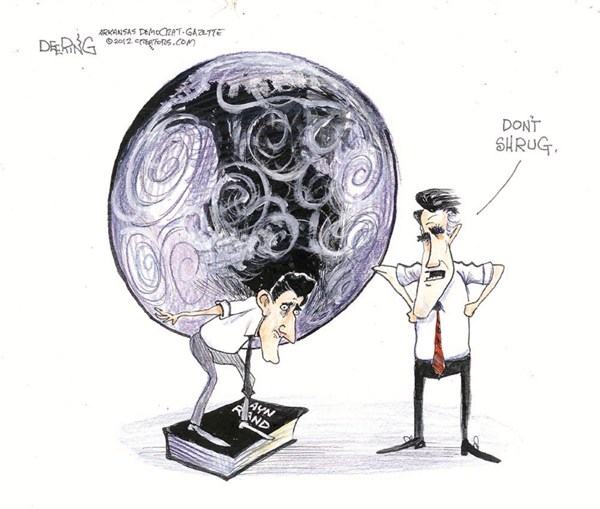
The Wingers' art of misdirection
............................................................................................

Thursday, October 11, 2012
Various and sundry political articles
..................................................................................................................................
Hundreds of pastors back political candidates, defy tax rules
By Nanette Byrnes, October 7, 2012
CEO to Workers: I May Fire You if Obama Wins
By Robert Frank, October 10, 2012
David Siegel, the owner of Westgate Resorts, sent a surprising email to his employees Monday.
Mitt Romney's fact-free foreign policy
By Dennis Jett, October 10, 2012
Hundreds of pastors back political candidates, defy tax rules
By Nanette Byrnes, October 7, 2012
Baptist Pastor Mark Harris stood before his flock in North Carolina on Sunday and joined hundreds of other religious leaders in deliberately breaking the law in an election-year campaign that tests the role of churches in politics.
By publicly backing candidates for political office from the pulpit, Harris and nearly 1,500 other preachers at services across the United States were flouting a law they see as an incursion on freedom of religion and speech.
Under the U.S. tax code, non-profit organizations such as churches may express views on any issue, but they jeopardize their favorable tax-exempt status if they speak for or against any political candidate.
[snipped]
....................................................................................................................................................................................................................................................................CEO to Workers: I May Fire You if Obama Wins
By Robert Frank, October 10, 2012
David Siegel, the owner of Westgate Resorts, sent a surprising email to his employees Monday.
It said that if President Barack Obama wins re-election and raises Siegel's taxes, he will have to lay off workers and downsize his company - or even shut it down.
"If any new taxes are levied on me, or my company, as our current President plans, I will have no choice but to reduce the size of this company," he wrote. "Rather than grow this company I will be forced to cut back. This means fewer jobs, less benefits and certainly less opportunity for everyone."
In a version of Romney's "47 percent" remarks, Siegel added that "people like me who made all the right decisions and invested in themselves are being forced to bail out all the people who didn't. The people that overspent their paychecks suddenly feel entitled to the same luxuries that I earned and sacrificed 42 years of my life for."
[snipped]
....................................................................................................................................................................................................................................................................Mitt Romney's fact-free foreign policy
By Dennis Jett, October 10, 2012
Fact checking the things that Mitt Romney says is like shooting at an elephant with a shotgun from a distance of five feet. The target is too big to miss, but hitting it also won't slow it down.
The effort to make him appear presidential just keeps lumbering on, like that elephant, unconstrained by the truth. One of his pollsters even said: "We're not going to let our campaign be dictated by fact-checkers."
His foreign policy speech on Monday to a group of cadets at the Virginia Military Institute was the latest example of inventing the facts to fit the message. The speech had the usual share of half-truths, plus a generous helping of foreign policy fantasies.
[snipped]
..................................................................................................................................
Wednesday, October 10, 2012
Good for Barbara Doherty!
..................................................................................................................................
Mother of slain Navy SEAL: Romney shouldn’t politicize her son’s death
By Max Zimbert, October 10, 2012
Mother of slain Navy SEAL: Romney shouldn’t politicize her son’s death
By Max Zimbert, October 10, 2012
[UPDATED: 2:40 p.m. ET] Mitt Romney's campaign told ABC News it would stop citing the meeting with Glen Doherty.
The mother of Glen Doherty, a Navy SEAL who was one of four Americans killed in the Sept. 11 attack in Libya, told a Boston TV station that GOP presidential candidate Mitt Romney shouldn't politicize her son's death.
Romney told an Iowa campaign audience on Tuesday about a chance encounter with a Navy SEAL during a Christmas party in San Diego, although he did not invoke Doherty by name. Romney owns a home in California and Doherty was stationed there, serving in the military. Romney cited the SEAL's dedication to the Middle East and his commitment to foreign service as a way to draw a contrast with President Barack Obama's response in the region, which Romney has criticized as lacking in leadership. As Yahoo News's Holly Bailey reported:
Citing a CNN report that Doherty had been killed while trying to help others at the consulate, Romney expressed his admiration—and likened it to the leadership he says the country needs now in Washington."When he and his colleagues there heard that the consulate was under attack ... they went there. They didn't hunker down where they were in safety. They rushed there to go help," Romney said. "This is the American way: We go where there's trouble. We go where we're needed. And right now we're needed. Right now the American people need us."
After Romney's remarks, Barbara Doherty told Boston's WHDH 7News that the GOP nominee shouldn't invoke her son that way again.
"I don't trust Romney," she said. "He shouldn't make my son's death part of his political agenda. It's wrong to use these brave young men, who wanted freedom for all, to degrade Obama."
Romney has amplified his criticisms of Obama's foreign policy and defense record with a speech on Monday that fact-checkers and the Obama campaign said was rife with errors and policy reversals.
..................................................................................................................................
Tuesday, October 9, 2012
GOP brand diminished? No... you don't say!
..................................................................................................................................
Diminished GOP brand heightens Romney's challenge
By Charles Babington, Octoer 9, 2012
Even with his strong debate performance, Mitt Romney needs every possible advantage to overtake President Barack Obama in the next four weeks. Not helping him much is the Republican Party he leads.
Thanks in part to congressional Republicans' no-compromise stands on key issues, and an unpopular past president in George W. Bush, the GOP's image is at one of its lowest points in modern times. Romney is now distancing himself a bit from some party policies, most notably by emphasizing that he doesn't want to cut taxes for high earners.
That's probably a smart move, say Republican activists in regions where it's getting harder to sell the party's brand.
When talking with unaffiliated voters, "it's more important to sell Romney" than Republican policies, said Jordan McSwain, 19, who makes about 800 phone calls a week for GOP candidates from the central North Carolina town of Salisbury. A lot of undecided voters tell him "the Republicans have stopped all work in Washington," McSwain said, although he reminds them that Democrats controlled Congress for Obama's first two years.
Ten months ago, Americans were fuming over a near crisis in the economy triggered by Congress' partisan showdown over raising the debt ceiling and keeping the government operating. A Pew Research poll found that considerably more adults thought the Republican Party was "more extreme in its positions" than the Democratic Party. They saw the GOP as less ethical and less willing to work with the other party. And more Americans blamed Republican leaders for Congress' paltry list of accomplishments.
Recent polls spell out the Republican Party's challenge. A CBS-New York Times poll last month found that 49 percent of adults had a favorable view of the Democratic Party, and 36 percent unfavorable. The GOP was upside down on the question, with 43 percent viewing it favorably, and 55 percent unfavorably.
This is partly because more Americans see themselves as Democrats. The latest AP-GfK poll found that 31 percent of adults considered themselves Democrats, 22 percent Republicans and 29 percent independents. When unaffiliated voters were pressed to say which way they lean, the results were 50 percent Democrat and 37 percent Republican.
The Democratic Party's favorable ratings are nothing to brag about. But party identification is less important to Obama, who has a four-year record for voters to judge. Romney, being less well known, must rely at least in part on the "Republican brand."
"The Republican brand name is in terrible shape, and people are not naturally sympathetic to the Republicans in Congress," Fox News commentator Brit Hume said in June.
Fox News commentator Charles Krauthammer, speaking in February of the rambunctious GOP primary, said, "This process has certainly hurt all the Republican candidates, and diminished the brand, unfortunately."
Romney's hopes may rest, at least somewhat, on distancing himself from the brand's less popular parts, while sacrificing as little fundraising and enthusiasm from the base as possible. The less popular parts, in some voters' eyes, include the uncompromising stand that many tea party-leaning Republicans have taken in Congress, especially on tax and spending issues.
In recent days, Romney has said he does not want to reduce the overall tax burden for high-income families, even though he still calls for a 20 percent cut in all federal income tax rates. He says changes in tax deductions would keep Americans' overall tax burden about the same. But he has not detailed how he can accomplish both goals.
Polls show significant support for Obama's call to increase taxes on households making more than $250,000 a year.
Romney's new emphasis on a no-net-decrease tax policy puts him at odds with many congressional Republicans, who say tax cuts for high earners will spur job growth.
The move delights GOP commentators such as David Brooks. During the presidential primaries, "the GOP did its best to appear unattractive," Brooks wrote last week in The New York Times. In Wednesday's debate with Obama, he wrote: "Romney did something no other mainstream Republican has had the guts to do. Either out of conviction or political desperation, he broke with tea party orthodoxy and began to redefine the Republican identity."
With the Nov. 6 election nearing, it's unclear what effect Romney's efforts will have.
Brian Nick, a Republican consultant based in Charlotte, said neither party "has a good brand right now," because Washington's constant partisan quarreling has given politics in general a bad name. He said, however, that Democrats have sometimes benefitted in competitive states by painting all Republicans as being more interested in party purity than in solving problems.
"Democrats do use the tea party label to attack Republicans and try to tie them to a strict orthodoxy," Nick said.
Further hurting the Republican brand is the status of each party's most recent former president. Only one-fourth of Americans had a favorable view of Bush when his presidency ended, according to Gallup. His standing has improved somewhat since then, but he lags far behind former President Bill Clinton. A recent Bloomberg News poll found that nearly 2 in 3 Americans favorably view the former Democratic president.
Ron Thomas, 26, is an independent voter with a fairly dim view of the national Republican Party.
"Who will help the working man more? It's definitely Barack," said Thomas, who works for a rental car company in Charlotte.
Thomas, who endured a chilly drizzle this week to discuss politics, has few problems with Republicans at the state level. In fact, he supports Republican Pat McCrory in the governor's race, saying the former Charlotte mayor is good on urban issues.
But Thomas said Romney turned him off with his claim that the 47 percent of Americans who don't owe federal income taxes will not take responsibility for their lives.
"I'm part of that 47 percent," Thomas said. "I have a college degree, and I work two jobs," he said, but it's still a struggle.
..................................................................................................................................
Diminished GOP brand heightens Romney's challenge
By Charles Babington, Octoer 9, 2012
Even with his strong debate performance, Mitt Romney needs every possible advantage to overtake President Barack Obama in the next four weeks. Not helping him much is the Republican Party he leads.
Thanks in part to congressional Republicans' no-compromise stands on key issues, and an unpopular past president in George W. Bush, the GOP's image is at one of its lowest points in modern times. Romney is now distancing himself a bit from some party policies, most notably by emphasizing that he doesn't want to cut taxes for high earners.
That's probably a smart move, say Republican activists in regions where it's getting harder to sell the party's brand.
When talking with unaffiliated voters, "it's more important to sell Romney" than Republican policies, said Jordan McSwain, 19, who makes about 800 phone calls a week for GOP candidates from the central North Carolina town of Salisbury. A lot of undecided voters tell him "the Republicans have stopped all work in Washington," McSwain said, although he reminds them that Democrats controlled Congress for Obama's first two years.
Ten months ago, Americans were fuming over a near crisis in the economy triggered by Congress' partisan showdown over raising the debt ceiling and keeping the government operating. A Pew Research poll found that considerably more adults thought the Republican Party was "more extreme in its positions" than the Democratic Party. They saw the GOP as less ethical and less willing to work with the other party. And more Americans blamed Republican leaders for Congress' paltry list of accomplishments.
Recent polls spell out the Republican Party's challenge. A CBS-New York Times poll last month found that 49 percent of adults had a favorable view of the Democratic Party, and 36 percent unfavorable. The GOP was upside down on the question, with 43 percent viewing it favorably, and 55 percent unfavorably.
This is partly because more Americans see themselves as Democrats. The latest AP-GfK poll found that 31 percent of adults considered themselves Democrats, 22 percent Republicans and 29 percent independents. When unaffiliated voters were pressed to say which way they lean, the results were 50 percent Democrat and 37 percent Republican.
The Democratic Party's favorable ratings are nothing to brag about. But party identification is less important to Obama, who has a four-year record for voters to judge. Romney, being less well known, must rely at least in part on the "Republican brand."
"The Republican brand name is in terrible shape, and people are not naturally sympathetic to the Republicans in Congress," Fox News commentator Brit Hume said in June.
Fox News commentator Charles Krauthammer, speaking in February of the rambunctious GOP primary, said, "This process has certainly hurt all the Republican candidates, and diminished the brand, unfortunately."
Romney's hopes may rest, at least somewhat, on distancing himself from the brand's less popular parts, while sacrificing as little fundraising and enthusiasm from the base as possible. The less popular parts, in some voters' eyes, include the uncompromising stand that many tea party-leaning Republicans have taken in Congress, especially on tax and spending issues.
In recent days, Romney has said he does not want to reduce the overall tax burden for high-income families, even though he still calls for a 20 percent cut in all federal income tax rates. He says changes in tax deductions would keep Americans' overall tax burden about the same. But he has not detailed how he can accomplish both goals.
Polls show significant support for Obama's call to increase taxes on households making more than $250,000 a year.
Romney's new emphasis on a no-net-decrease tax policy puts him at odds with many congressional Republicans, who say tax cuts for high earners will spur job growth.
The move delights GOP commentators such as David Brooks. During the presidential primaries, "the GOP did its best to appear unattractive," Brooks wrote last week in The New York Times. In Wednesday's debate with Obama, he wrote: "Romney did something no other mainstream Republican has had the guts to do. Either out of conviction or political desperation, he broke with tea party orthodoxy and began to redefine the Republican identity."
With the Nov. 6 election nearing, it's unclear what effect Romney's efforts will have.
Brian Nick, a Republican consultant based in Charlotte, said neither party "has a good brand right now," because Washington's constant partisan quarreling has given politics in general a bad name. He said, however, that Democrats have sometimes benefitted in competitive states by painting all Republicans as being more interested in party purity than in solving problems.
"Democrats do use the tea party label to attack Republicans and try to tie them to a strict orthodoxy," Nick said.
Further hurting the Republican brand is the status of each party's most recent former president. Only one-fourth of Americans had a favorable view of Bush when his presidency ended, according to Gallup. His standing has improved somewhat since then, but he lags far behind former President Bill Clinton. A recent Bloomberg News poll found that nearly 2 in 3 Americans favorably view the former Democratic president.
Ron Thomas, 26, is an independent voter with a fairly dim view of the national Republican Party.
"Who will help the working man more? It's definitely Barack," said Thomas, who works for a rental car company in Charlotte.
Thomas, who endured a chilly drizzle this week to discuss politics, has few problems with Republicans at the state level. In fact, he supports Republican Pat McCrory in the governor's race, saying the former Charlotte mayor is good on urban issues.
But Thomas said Romney turned him off with his claim that the 47 percent of Americans who don't owe federal income taxes will not take responsibility for their lives.
"I'm part of that 47 percent," Thomas said. "I have a college degree, and I work two jobs," he said, but it's still a struggle.
..................................................................................................................................
Make it easy to meet voter ID requirements, especially for seniors!
..................................................................................................................................
Getting the runaround in order to vote
By Barbara Shelly, October 9, 2012
If a state is going to place requirements on voting, it had darned well better make it easy and convenient for people to meet those requirements. Why not a mobile van to make the rounds of senior housing and get people fixed up with ID cards on the spot?
Getting the runaround in order to vote
By Barbara Shelly, October 9, 2012
A judge in Pennsylvania last week put a hold on the state’s new voter ID law. Citizens will not be required to produce government-issued photo identification in order to have their vote count on Nov. 6.
That must be a disappointment to the Republican state legislative leader who had exulted upon the law’s passage that “this is gonna allow Governor Romney to win the state of Pennsylvania.”
And, in fact, polls showed that a majority of voters in the Keystone State generally support the notion of producing a photo ID at the polls.
But I was in Pennsylvania just a week ago, and found a much different sentiment in my small focus group — that being my mom and her pals in her senior residence.
Particularly aggrieved, with good reason, was my mother’s neighbor, Mary Edith Knox.
Her task was to renew her non-driver’s ID. So she phoned the proper state office and inquired as to how to do that. She was told to report to the commonwealth auto tag office near her residence.
Knox’s daughter-in-law took time off work to drive her there. Knox filled out an application, and then was instructed to report to the driver’s license bureau in another town, about 20 miles away, to get her photo taken.
Brilliant. Here is a lady in her 80s who doesn’t drive, and the state makes her travel to two locations to obtain an ID card to be able to vote.
Between the two offices, Knox paid $29.
After a little investigating, we deduced Knox was wrongly directed to the auto tag office. Also, if she had known how to go about it, she should have been able to obtain the non-driver’s license free of charge. But how would she have known? The worker I talked to sounded confused herself.
Then again, why require photo ID at all?
Instances of people voting under false identities are minuscule. One study found 10 cases since 2000. Another found fewer than one case of fraud per state per year, and that included offenses such as using the wrong address.
Perhaps so, proponents say. But we need a photo ID to purchase liquor. We need one to cash a check, and to fly. Why shouldn't we demand one for voting?
Well, you can find someone else to buy you a six-pack. You can endorse a check and have a friend cash it for you. If you really have to get somewhere, you can find a way.
But there’s no way to make your vote count except by voting. And only you can cast your ballot.
By requiring people to navigate layers of bureaucracy to obtain documents, states are impeding a basic right of citizenship.
In Missouri, we have a Republican candidate for secretary of state who is basing much of his campaign on a pledge to making voting more difficult.
Kansas already has one of the nation’s most draconian voter ID laws, the full effect of which won't be seen until next year.
States don’t have enough money to run their schools or care for developmentally disabled citizens. Yet they're keen to pass voter ID laws, which will require a huge investment of staff time, equipment upgrades and other expenses if they’re to work at all. No wonder courts in many states are putting holds on these laws or striking them down.
I believe the underlying rationale for voter ID laws is to discourage voting in immigrant and minority communities. But in their rush to do so, lawmakers are hurting America’s most revered demographic, its seniors.
“I am being charged $29 for the right to vote.” said Knox. She describes herself as a political junkie, who hasn't missed an election in decades.
“The basic idea of having photo ID is sound, but it’s not workable,” Knox said.
Or necessary, I would add.
..................................................................................................................................
Monday, October 8, 2012
Mitt is still a conservative, pragmatic or not
..................................................................................................................................
Moderate Mitt? Don't count on it
By Doyle McManus, Los Angeles Times, October 8, 2012
On taxes, Romney rebutted Obama's charge that he is seeking a $5-trillion tax cut for the wealthy, saying, "I'm not going to reduce the share of taxes paid by high-income people." That has been his position for some time, but during the GOP primary campaign he put his emphasis in a different place. "We're going to cut taxes on everyone across the country by 20 percent, including the top 1 percent," he said then.
On health care, Romney said he considers the insurance law he passed in Massachusetts "a model for the nation, state by state" - meaning he still thinks healthcare should be handled at a state level; that's not a change. And he said he wants to keep the most popular provisions of Obama's healthcare law, including its guarantee that insurance will cover preexisting conditions - but his plan guarantees that only to people who already have health insurance, a provision that's in federal law now.
On education, Romney surprised some conservatives during the debate by saying, "I'm not going to cut education funding." That seemed to conflict with his own policy paper on education, which called Obama's education spending excessive and said, "Flooding colleges with federal dollars only serves to drive tuition higher." But campaign aides last week insisted that Romney had never formally proposed cutting education spending.
Last week, Romney took a half-step toward the center, a move dictated by the needs of a faltering presidential campaign. But it didn't change his core positions; he's still a conservative.
..................................................................................................................................
Moderate Mitt? Don't count on it
By Doyle McManus, Los Angeles Times, October 8, 2012
Who is the real Romney?
Only a month from Election Day and almost 20 years into Mitt Romney's political career, the question is still being asked.
Is it Moderate Mitt, the governor of Massachusetts who once championed abortion rights and enacted a state-administered health insurance plan? Or is it Severely Conservative Mitt, the presidential candidate who battered rivals on the right by calling for deeper tax cuts and tougher immigration laws?
Last week, based on Romney's soul-of-sweet-reason performance in his debate with President Obama, it was tempting to conclude that Moderate Mitt was back.
In the Denver debate, Romney polished the rough edges off some of the positions he held while he was running in that severely conservative GOP primary campaign. He no longer seeks a "tax cut," he said, at least not for the wealthy - merely "tax relief." He still wants to repeal Obama's healthcare law, but he also wants to keep provisions that are popular. He's not against regulating financial markets, only "excessive regulations." He even promised not to cut federal spending on education, a break from the orthodox GOP view that education spending is too high.
Fans of Moderate Mitt were elated.
That was "the real Romney," crowed former GOP strategist Mike Murphy, who worked on Romney's 2002 campaign for governor. "The Mitt we saw out there ... was finally free of the duct tape of the Republican base politics to get out and be the pragmatist he is."
Well, maybe. A closer look suggests that Romney's move toward the center is a matter of tone and emphasis more than substance. It took Obama by surprise, and it gave Romney a new chance to make his case to voters in the center - all of which made it a success for the GOP campaign. But down in the details, there was less change in Romney's positions than met the ear, and his campaign insisted that he didn't say anything substantively new at all.
Let's take three issues: taxes, health care and education.
The problem, of course, is that Romney's tax proposal promises many things - lower tax rates, fewer tax deductions and no net change in federal revenue - but the candidate has never provided enough details to show how all those things can work. Obama and his allies have seized on the cut in tax rates to charge that the plan would benefit the wealthy at the expense of everyone else; Romney says he won't let that happen, but he doesn't say how beyond asserting that economic growth would solve the problem.
There's no way to settle that argument. But on a tax issue that's arguably more important, the two candidates' positions were unchanged. Obama still wants to increase taxes on high-income taxpayers to help reduce the federal deficit; Romney still firmly rejects increasing taxes on anyone.
The politics of Romney's change in tone was straightforward. In the final weeks of a general election campaign, he needs to appeal to voters in the center. The wonder is that his apparent turn toward the middle didn't come earlier. After all, one of his top aides promised after Romney won the primary that the campaign would start over, "almost like an Etch-A-Sketch."
But notice that those who know Romney best, like Murphy, don't use the word "moderate" to describe him. The adjective they prefer is "pragmatic" - as in "pragmatic conservative."
On the substance of his positions, Romney's die is cast. He remains steadfast against raising taxes, even to help reduce the deficit. He remains intent on repealing Obama's health-care law, even without a full-scale alternative to propose in its place.
History suggests that presidents take their positions and promises seriously, and they take their political lives into dangerous territory if they don't. That's why George H.W. Bush got into trouble when he broke his promise never to raise taxes. It's why Barack Obama plowed ahead toward a big economic stimulus package and an ambitious healthcare law, even when it became clear that his wish for post-partisan government would be a casualty.
..................................................................................................................................
Subscribe to:
Posts (Atom)